
Engineering Services
In manufacturing processes where mechanical parts operate in oil-free, dry beds, the required dimensions must have sub-micron (±0.1 μm) circularity/cylindricity tolerances and the lowest possible surface roughness (Ra<0.05 μm). Achieving these design values is only possible with high-quality machining techniques. İMTEK, with its established Ultra Precision Machining infrastructure, is the only company in Turkey capable of producing at these values.
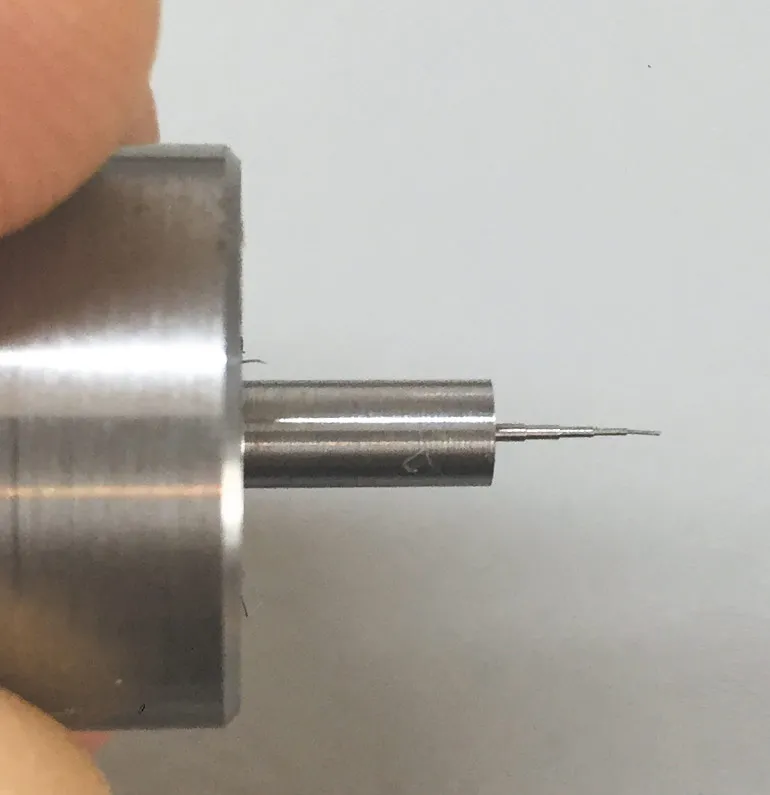
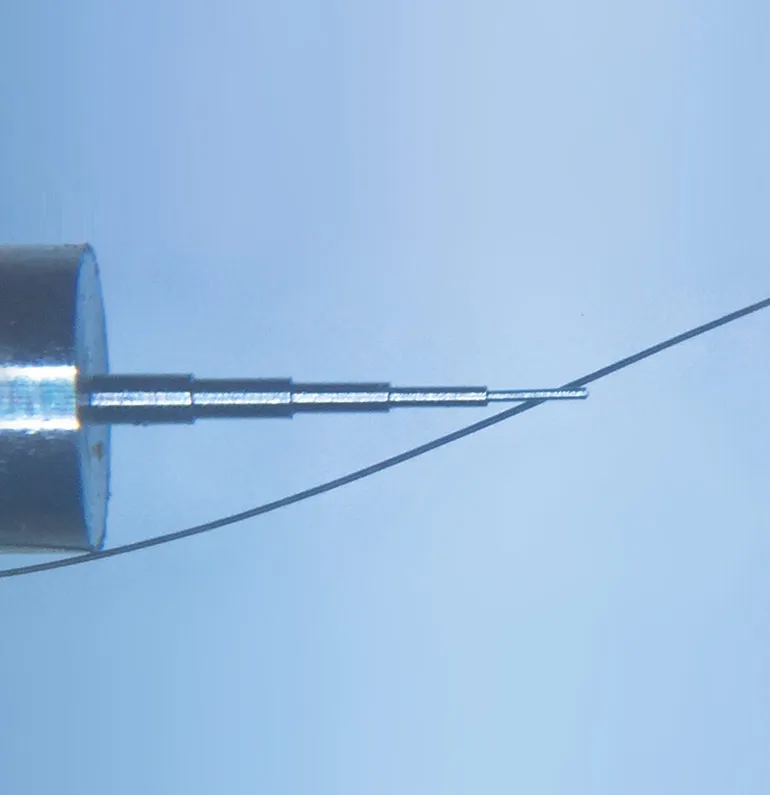
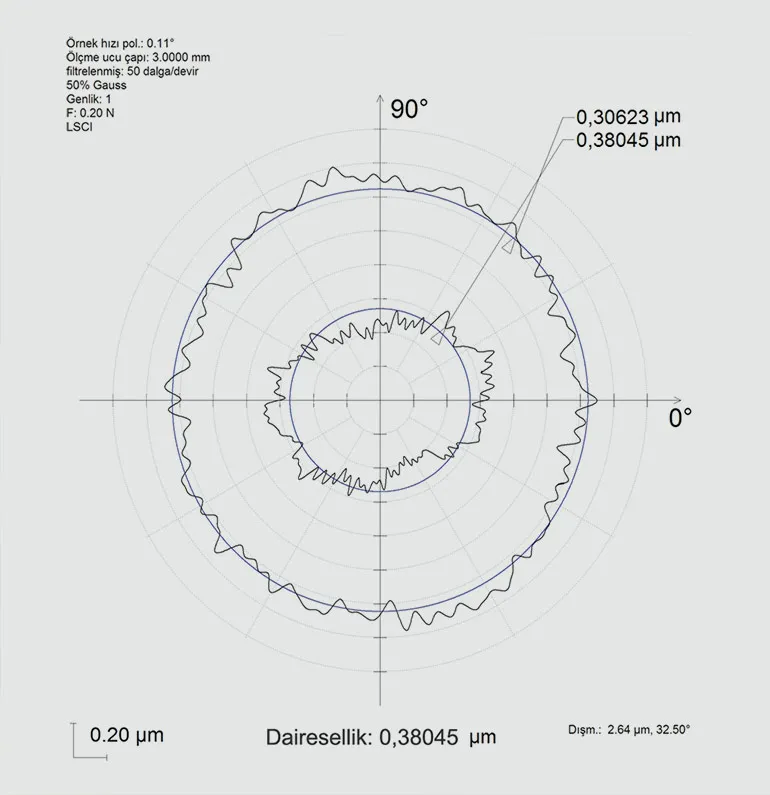
In terms of meeting customer needs, terms like “precision manufacturing,” “high precision,” and “ultra-precision” used for manufacturing technologies are meaningless on their own without further detail. Therefore, evaluating a manufacturer’s high-precision machining capabilities is quite challenging. The accompanying photographs and analyses are significant in demonstrating İmtek’s ultra-precision machining capabilities. The first image shows a stainless steel part composed of cylinders with diameters increasing by 100 μm . The second image shows the diameter of the outermost cylinder compared to a 100 μm diameter hair strand used by an operator. The final image shows the circularity/cylindricity measurements taken on the last two cylinders: ±0.15 and ±0.19 μm.